Trapped by Opportunity
Inside the Trafficking Pipeline Feeding Southeast Asia’s Scam Compounds
John Payne
4/16/20263 min read
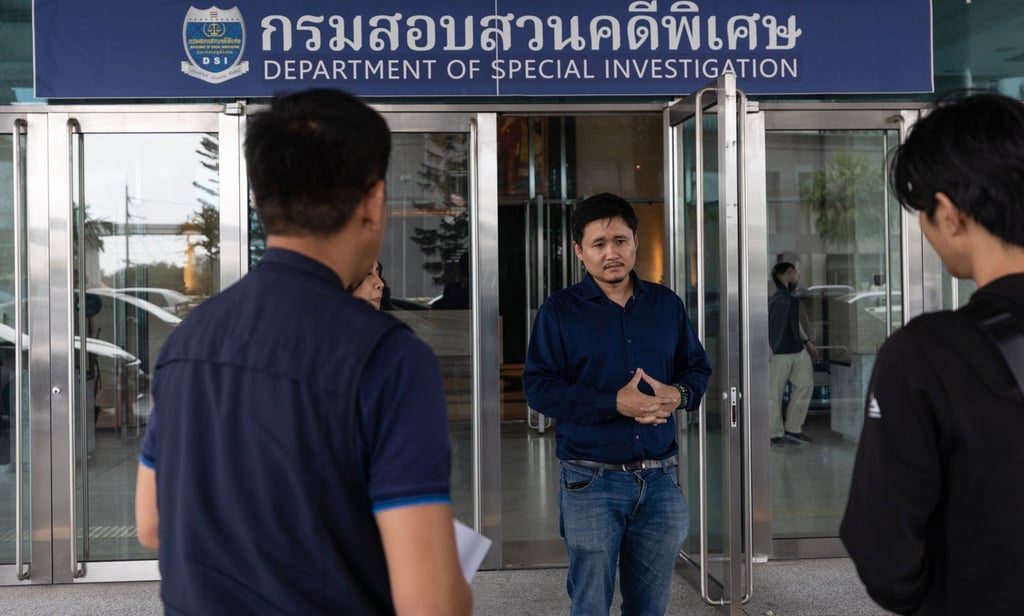
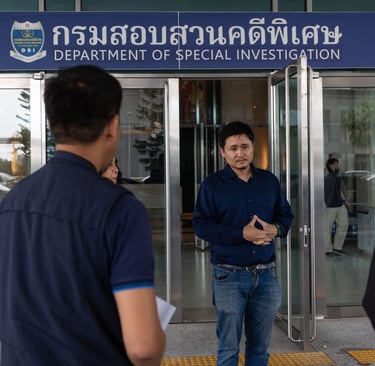
BANGKOK - In Thailand’s rural provinces, where wages have stagnated and household debt continues to climb, job offers promising quick income and remote work are difficult to ignore. For many, they represent a rare chance to break out of financial hardship. Recruiters know this. They craft their pitches carefully, offering flexible roles, attractive salaries, and minimal barriers to entry.
All that is required, applicants are told, is a short trip to Bangkok for a day of training. Transport is provided. The process appears organised and legitimate. For some, it feels like luck.
It is anything but.
Interviews with survivors, aid workers, and regional investigators reveal a consistent pattern. Victims are collected as arranged, often from bus stations or agreed meeting points. Within hours, the situation shifts. Some are threatened with weapons. Others are drugged. Several accounts describe oxygen masks being forced onto victims before they lose consciousness.
When they wake, they are no longer in Thailand.
Instead, they find themselves across the border in Cambodia, frequently in Poipet, a town that has emerged as a hub for large-scale scam operations. There, behind guarded compounds and secured buildings, trafficked individuals are forced into a system of organised cybercrime.
Their task is simple in structure but devastating in impact. They must scam.
Victims are trained to run romance schemes, posing as lovers to extract money. Others impersonate police or government officials in extortion calls. Some operate fake e-commerce platforms, advertising goods that do not exist. In many cases, their targets are fellow Thai citizens.
The work is relentless and monitored closely. Failure carries consequences.
Survivors describe a regime of violence designed to enforce compliance. Beatings are routine. Electric shocks are used as punishment. Some report witnessing severe torture. A small number speak of killings carried out as warnings to others.
“It is about control,” said one regional anti-trafficking worker who has assisted in multiple rescues. “They break people down until they will do whatever they are told.”
Inside the compounds, a crude internal economy exists. Those who generate higher profits through scams may receive credits. These can be exchanged for food, alcohol, or other limited comforts. In some compounds, survivors report that women are also exploited within this system.
Performance can lead to promotion. Individuals who comply and produce results may be elevated to supervisory roles, overseeing others who are still resisting or newly trafficked.
The structure creates a cycle that is difficult to escape. Victims are forced to harm others in order to survive, while being slowly integrated into the system that exploits them.
Leaving is dangerous.
Escape requires navigating armed guards, unfamiliar terrain, and the risk of being captured again. Even outside the compounds, safety is not guaranteed. Some victims report fearing local authorities, who they believe may be unwilling or unable to help.
Crossing back into Thailand is only the beginning of another struggle.
Many return without identification documents. Some have been held for years, cut off from family, banks, and official records. Without proof of identity, they face lengthy legal processes to confirm their nationality and access support services.
Repatriation can take months or longer.
Government agencies, non-government organisations, and international groups are working to address the issue, but the scale is significant. Prevention efforts focus on raising awareness in vulnerable communities, warning of suspicious job offers and recruitment tactics. Rescue operations require coordination across borders, often in complex political and legal environments.
Support does not end with rescue. Survivors need medical care, psychological support, and assistance rebuilding their lives. Many return with trauma, debt, and little means to start over.
“This is not just organised crime,” said one advocate involved in rehabilitation efforts. “It is a system built on human vulnerability.”
Despite increased attention, the networks continue to expand. The combination of economic pressure, digital access, and sophisticated recruitment methods has created a steady flow of victims.
For those still inside the compounds, the promises that brought them there remain a cruel contrast to reality. What began as an opportunity has become captivity, enforced through fear and sustained by exploitation.
And for every person who makes it back, many others remain unaccounted for.
Aid Meridian Ltd
ABN 62 688 406 117
Registered Australian Charity & Public Benevolent Institution
Endorsed as a Deductible Gift Recipient (DGR)
Donations of $2 or more are tax deductible in Australia.
© 2025. All rights reserved.