Targeting Trust at Home in Australia
How Overseas Scam Compounds Are Exploiting Elderly Australians
John Payne
4/16/20263 min read
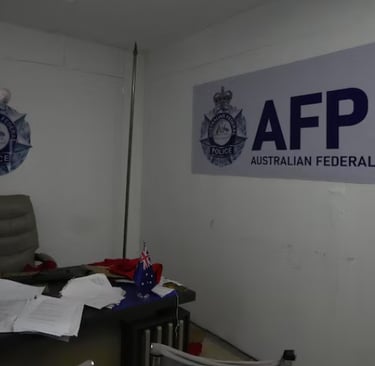
Authorities and researchers say the voices behind many scam calls targeting elderly Australians may not be who they appear to be. Increasingly, reports suggest some of those carrying out the fraud are themselves victims, trafficked into scam compounds across Southeast Asia and forced to participate in large-scale cybercrime operations.
Evidence emerging from investigations in Cambodia points to a growing link between human trafficking networks and scams reaching as far as Australia. In compounds uncovered near border regions, officials reported thousands of individuals working in coordinated scam operations, many believed to have been trafficked and forced into the work.
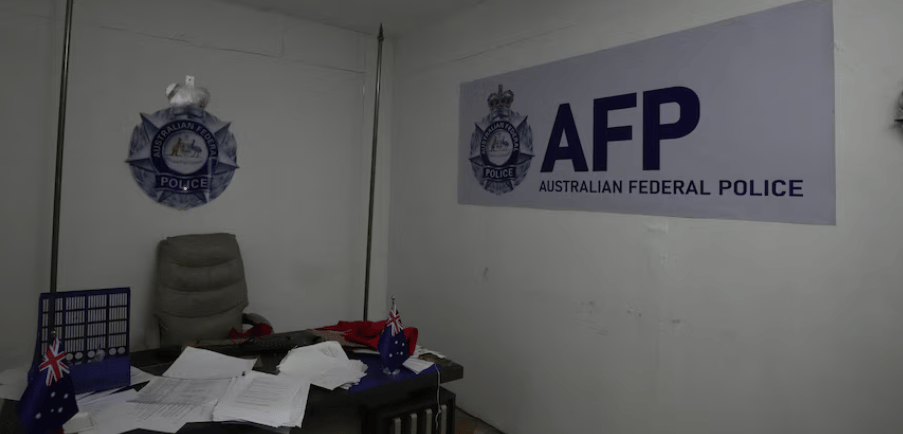
Inside one such compound, investigators described rooms staged to resemble offices of international law enforcement agencies, including the Australian Federal Police. These sets were reportedly used during video calls to convince victims they were dealing with legitimate authorities.
Experts say the tactic is designed to exploit trust, particularly among older people who may be more likely to defer to perceived authority.
“It is physical evidence of how state authority itself has become a tool of organised crime,” one researcher was reported as saying.
A system built to deceive
While details vary and many claims remain unverified, reporting across multiple cases points to a structured system.
Workers inside these compounds are said to follow scripts, assume false identities, and manage dozens of conversations at once. In some operations uncovered elsewhere, individuals were reportedly tasked with maintaining contact with up to 40 or more potential victims simultaneously, often posing as romantic partners or financial advisers.
The process is deliberate.
Initial contact is made through text messages, social media, or phone calls. Over time, trust is built. Victims are then guided into transferring money, investing in fake schemes, or handing over sensitive financial information.
Video calls may be used to reinforce the deception, sometimes conducted from staged environments designed to resemble official offices or high-end settings.
Why older Australians are targeted
Older Australians are considered particularly vulnerable to these scams.
Industry guidance has long warned that people over the age of 50 face an increased risk of financial abuse, scams, and fraud. This vulnerability is often linked to factors such as isolation, trust in institutions, and lower familiarity with rapidly changing digital systems.
Scammers are known to exploit these conditions.
They rely on emotional triggers including fear, loneliness, urgency, and compassion. In many cases, victims are pressured into making quick decisions without time to verify information.
Romance scams are among the most common. Victims may believe they are forming genuine relationships, only to be asked for money to cover emergencies, medical expenses, or travel.
Other scams involve impersonation of authorities. Victims are told they are under investigation or that their accounts have been compromised. They are then instructed to transfer funds or provide personal details.
Investment scams also feature prominently, with fraudsters presenting opportunities that promise high returns with little risk.
Industrial scale operations
Investigators describe these scam operations as highly organised.
Compounds are reported to include dedicated workstations, scripts in multiple languages, and databases of potential targets. Some facilities are believed to house thousands of workers operating in shifts.
In similar operations identified globally, investigators have suggested that tens of thousands of potential victims can be contacted at any one time.
The financial impact in Australia is significant. Reports indicate that millions of Australians have been affected by scams and fraud, with losses reaching into the billions over time. However, the true scale is believed to be higher, as many victims do not report incidents due to embarrassment or confusion.
A cycle of exploitation
What makes the system particularly complex is the role of those carrying out the scams.
Some reports indicate that individuals inside these compounds are subjected to strict quotas and punishment if they fail to meet targets. In certain cases, they are said to improve their living conditions only by successfully scamming others.
“It becomes a system where vulnerability exists on both sides,” one observer noted.
While not all workers are believed to be trafficked, the overlap between organised crime and human exploitation has been described as a growing concern by regional analysts.
Challenges for authorities
Law enforcement agencies face significant challenges in responding to the threat.
The operations span multiple countries, rely on digital infrastructure that is difficult to trace, and can relocate quickly. The use of impersonation tactics also risks undermining public trust in legitimate institutions.
Authorities have warned that genuine agencies will not request money or sensitive information over the phone or through video calls. Despite this, the sophistication of the scams makes them difficult to detect, particularly under pressure.
An evolving threat
Experts say the model is continuing to evolve.
New technologies are expected to make scams more convincing, with increasingly realistic voices, images, and online identities. Combined with existing tactics such as staged environments and scripted interactions, this raises concerns about future risks.
For now, the connection between trafficking networks and scams targeting elderly Australians remains an area of active investigation, with many details still emerging.
What is clear is that the system operates across borders and at scale, targeting those seen as most vulnerable.
At one end of the call, an elderly Australian being asked to trust.
At the other, a voice that may not have a choice.
Aid Meridian Ltd
ABN 62 688 406 117
Registered Australian Charity & Public Benevolent Institution
Endorsed as a Deductible Gift Recipient (DGR)
Donations of $2 or more are tax deductible in Australia.
© 2025. All rights reserved.